
The Confrontation Between Biff and Willy
Death of a SalesmanChronicles the explosive father-son conflict that spans fifteen years, from Biff's discovery of Willy's affair to their final, cathartic argument.
increasing Bearing strength in each event
 decreasing
Bearing strength in each eventdecreasingBiff's Return
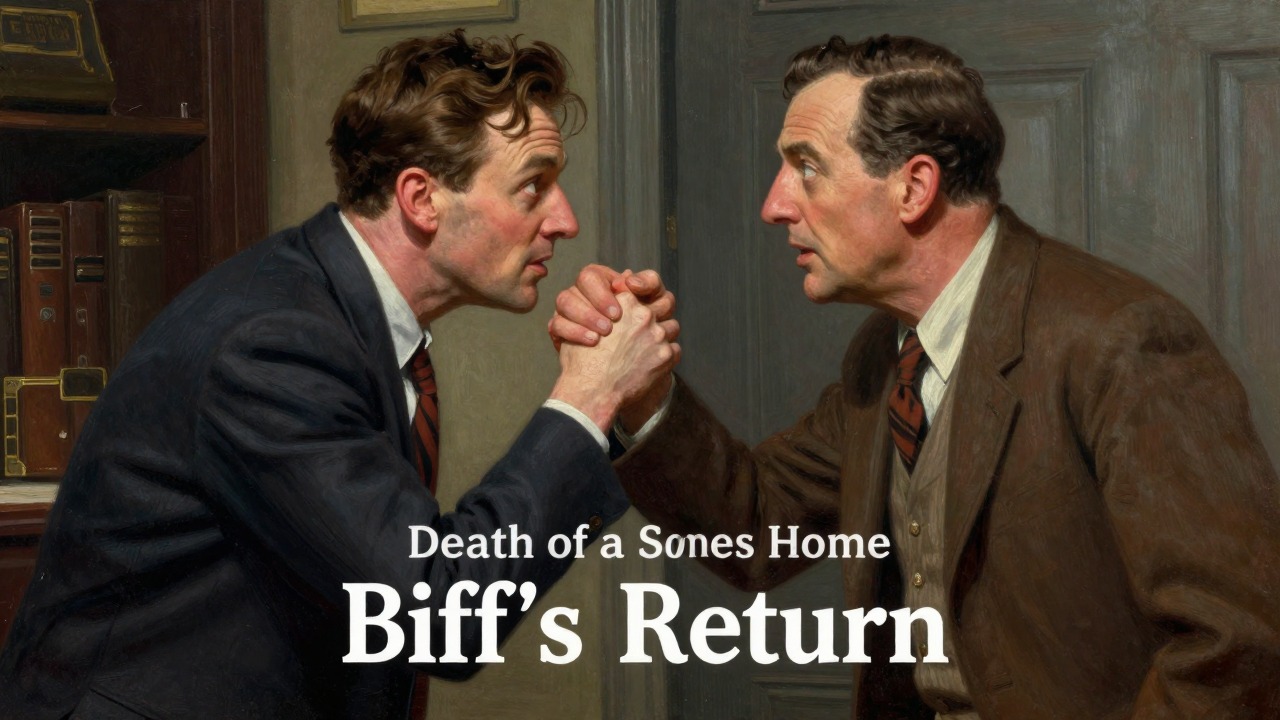
A Son Comes Home
Tension in the Air
Biff Loman returns after years in the West. He is thirty-four, still unsettled, and immediately clashes with his father. Willy criticizes him for not making money, while Biff feels the old mockery in his father's tone. The undercurrent of unresolved conflict is palpable.
The Weight of the Past
Biff admits to Happy that he feels lost, that every spring he comes home because he realizes he is getting nowhere. But he also senses that something is wrong with his father. The memory of a past betrayal haunts him, though he does not disclose it yet.
A Fragile Truce
Linda mediates, and the family agrees to a hopeful plan: Biff will ask Bill Oliver for a loan to start a business. Willy is overjoyed, but the reconciliation is fragile, built on a lie about Biff's past employment.
The Failed Loan
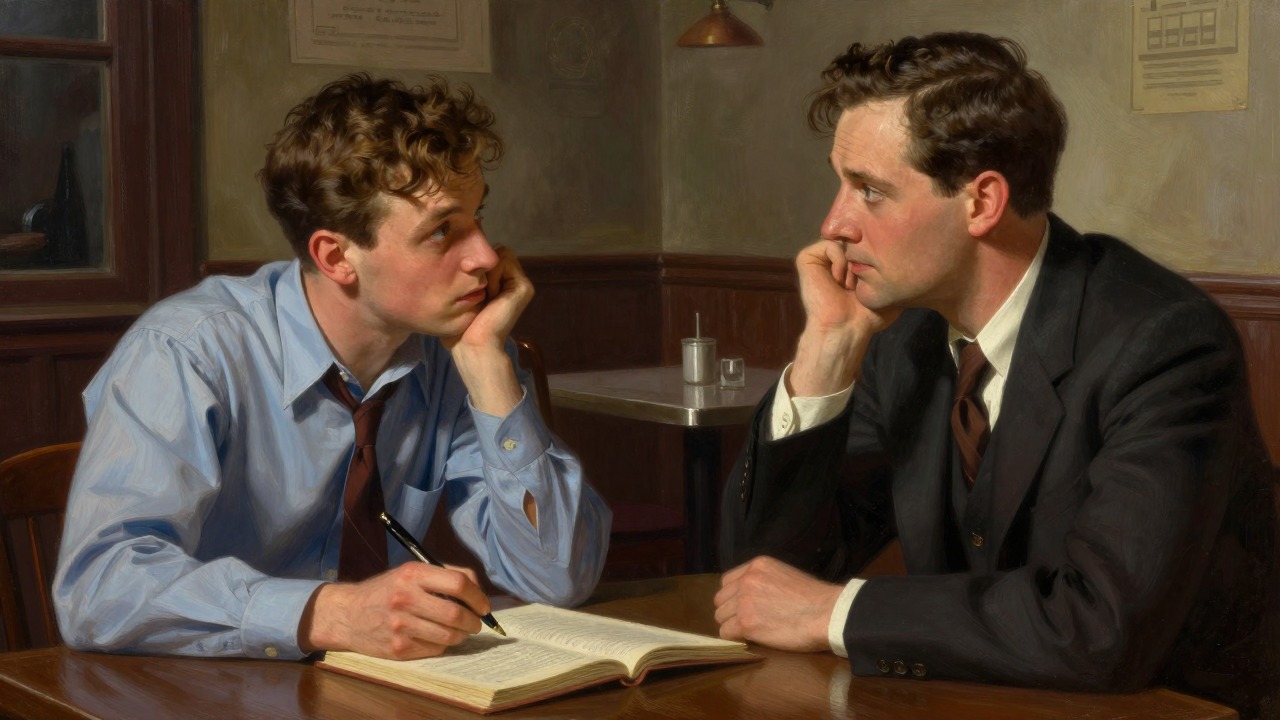
The Crushing Truth
Waiting in Vain
Biff waits all day to see Bill Oliver, but Oliver does not remember him. Biff realizes he was never a salesman, only a shipping clerk. In a moment of desperation, he steals Oliver's fountain pen.
Confession to Happy
Biff meets Happy at the restaurant and confesses the truth. He is ashamed and knows he cannot go back to Oliver. Happy suggests lying to Willy, but Biff insists on telling the truth.
The Burden of Honesty
Biff understands that he has been living a lie, perpetuated by his father's expectations. He decides to finally confront Willy and break the cycle of deception.
Restaurant Showdown
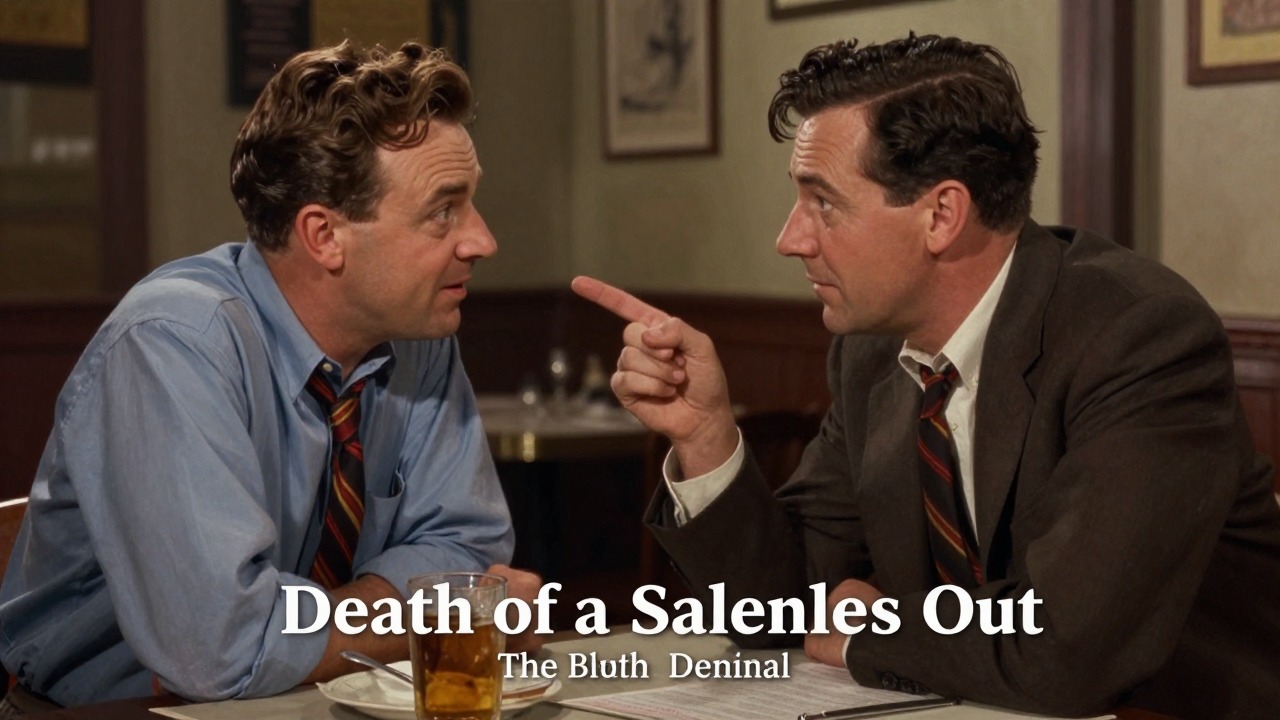
The Truth Tumbles Out
Willy's Denial
At Frank's Chop House, Willy refuses to hear Biff's story. He insists that Oliver must have given him a warm welcome. Biff tries to explain, but Willy's mind is elsewhere, reliving the past.
The Boston Flashback
Willy's hallucination takes over: he recalls the moment in the Boston hotel room when Biff discovered him with The Woman. The memory surfaces as Biff desperately tries to get through to him.
Abandonment and Anger
Biff's frustration boils over. He shows the pen, and Willy accuses him of stealing. Biff's anger turns to despair, and he leaves the restaurant, but not before revealing the rubber hose he found in the cellar. The confrontation is unresolved.
Final Argument at Home
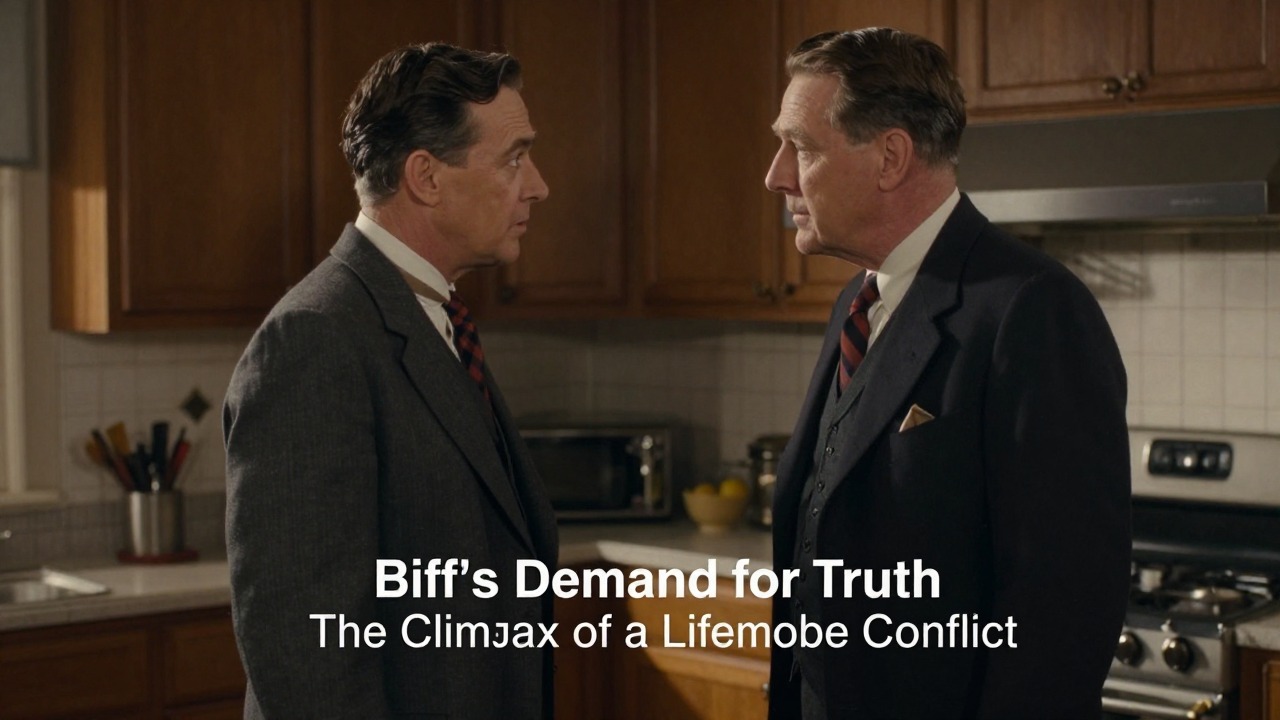
The Climax of a Lifelong Conflict
Biff's Demand for Truth
After the restaurant debacle, Biff returns home determined to end the pretense. He confronts Willy in the kitchen, refusing to let him escape into fantasy. He reveals that he stole a suit and was in jail, that he has been a failure by every measure.
Willy's Rage
Willy accuses Biff of spite, of cutting down his life for revenge. But Biff tears away the final veil: he tells Willy that they are both ordinary men, "a dime a dozen." He says he is not a leader of men, and neither is Willy.
The Unexpected Release
Biff breaks down sobbing, and Willy, astonished, sees that Biff still loves him. The hatred dissolves, and Willy embraces Biff's tears as a sign of affection. But this moment of clarity is twisted: Willy interprets it as validation for his suicide plan.
Biff's Departure
A Son's Resolution
Saying Goodbye
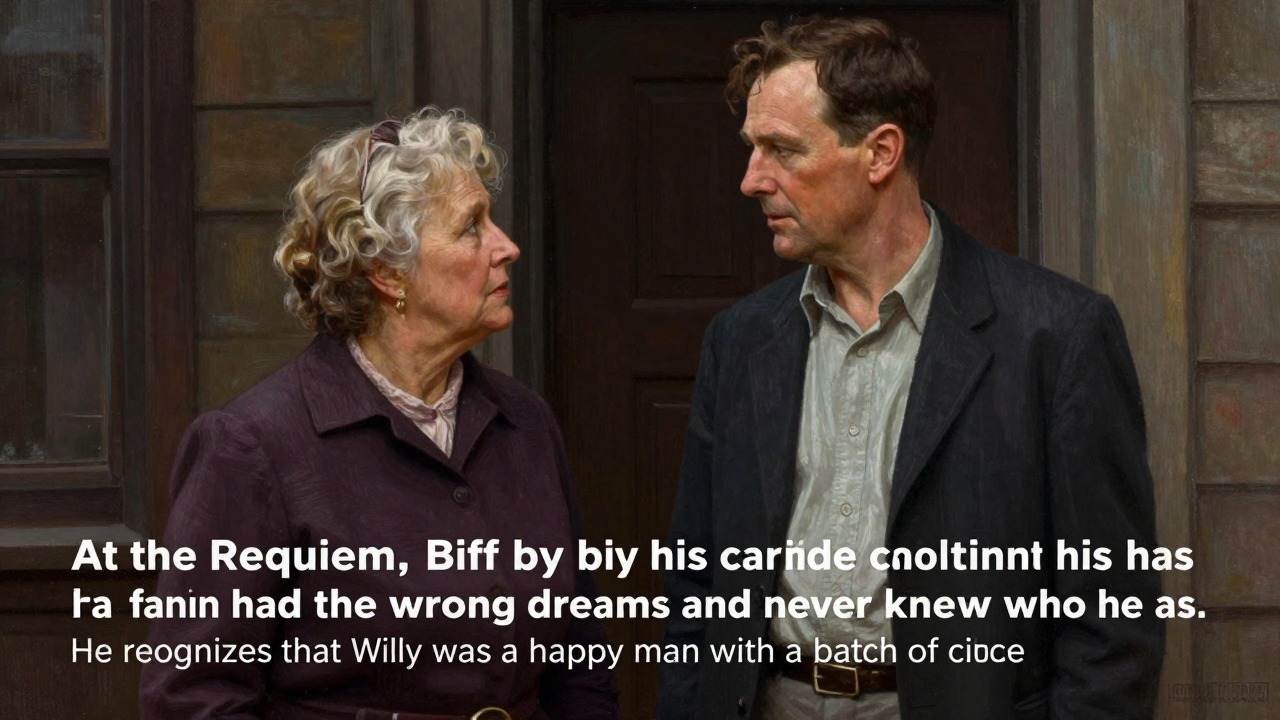
At the Requiem, Biff stands by his mother. He tells Charley that his father had the wrong dreams and never knew who he was. He recognizes that Willy was a happy man with a batch of cement.
Choosing His Own Path
Biff decides to go back West, leaving the city and its false promises. He has finally understood that he cannot live by his father's illusions. He invites Happy to come, but Happy refuses.
A New Beginning
Biff lifts Linda and carries her away. His journey is one of self-knowledge, even as he mourns the father who could not find his own identity. The play ends with a sense of release, but also of loss.
Present day, morning
Later that day
Evening, present day
Late night, present day
The next morning, after the funeral
